Kitchen Cabinet Painting Cost Denver | 2026 Pricing Guide
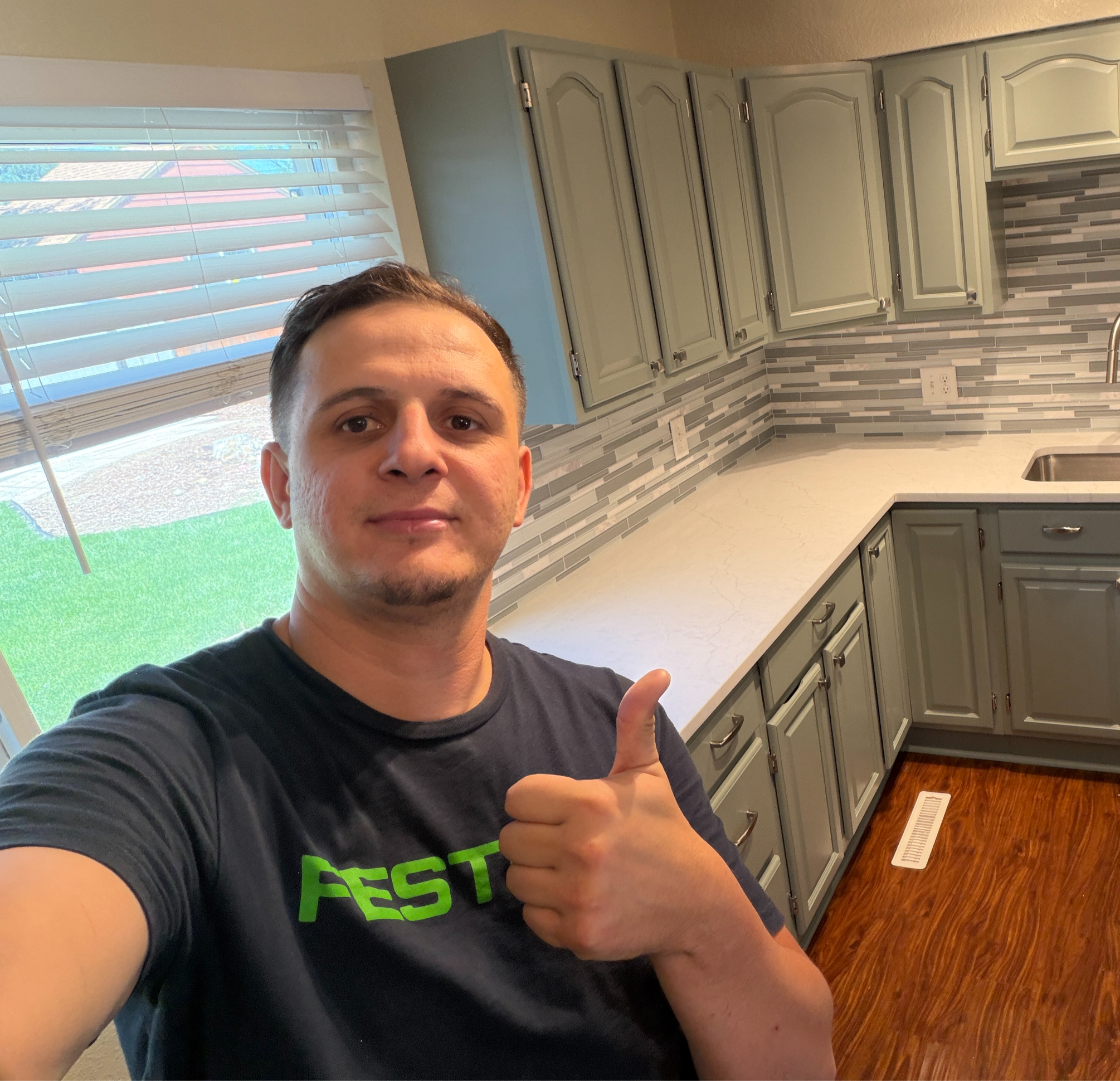

If you’re thinking about updating your kitchen without replacing your cabinets, one of the first questions is usually:
How much does it cost to paint kitchen cabinets in Denver?
For most kitchens in the Denver area, professional cabinet painting typically falls between $3,500 and $7,500, depending on the size of the kitchen, number of doors and drawers, cabinet condition, layout, and finish requirements.
A standard kitchen with around 25 cabinet doors often lands near $3,800, while larger kitchens, detailed cabinet styles, damaged surfaces, or more complex refinishing work can cost more.
At InchPerfect Cabinet Painting, we focus specifically on professional cabinet refinishing. The goal is not simply to change the color. The goal is to create a smooth, durable sprayed finish that looks much closer to a factory finish than traditional brushed or rolled paint.
How Much Does Cabinet Painting Cost in Denver?
There is no single price that works for every kitchen because cabinets vary significantly from home to home.
A typical Denver-area cabinet painting project may fall into these ranges:
Small kitchen: approximately $3,000–$4,000
Average kitchen: approximately $3,500–$5,500
Large kitchen: approximately $5,500–$7,500+
The final price depends heavily on the number of cabinet doors and drawers as well as the amount of preparation required.
For example, a kitchen with simple shaker-style doors in good condition will usually require less repair work than older oak cabinets with heavy grain, grease buildup, dents, cracks, or damaged edges.
What Affects the Cost of Cabinet Painting?
Several factors determine the final price of a professional cabinet refinishing project.
1. Number of Cabinet Doors
The number of doors is one of the biggest factors in pricing.
Every cabinet door must typically be:
Removed and labeled
Cleaned and degreased
Sanded
Primed
Inspected for imperfections
Repaired when necessary
Sanded again
Sprayed with professional cabinet coating
Allowed to dry and cure
Reinstalled
A kitchen with 40 doors naturally requires considerably more labor and coating material than a kitchen with 15 doors.
2. Number of Drawers
Drawer fronts require essentially the same preparation and finishing process as cabinet doors.
Larger kitchens with multiple drawer banks can therefore increase the total project cost.
3. Cabinet Condition
Older cabinets often require more preparation.
Common issues include:
Grease buildup
Scratches
Dents
Cracks
Old paint failure
Peeling coatings
Damaged corners
Previous DIY paint jobs
These problems should be corrected before the final coating is applied.
Professional cabinet refinishing is heavily dependent on preparation. Applying expensive paint over a poorly prepared surface will not create a durable finish.
4. Wood Type
Some cabinet materials require more preparation than others.
Oak cabinets, for example, have a pronounced wood grain. Homeowners who want an extremely smooth appearance may require additional grain filling and sanding.
Maple and other smoother cabinet surfaces may require less grain correction.
However, almost any properly constructed cabinet can usually be refinished if the existing surface is structurally sound.
5. Cabinet Style
Simple flat-panel or shaker-style cabinets are generally easier to prepare and spray.
Highly detailed doors with grooves, raised panels, decorative profiles, or extensive trim require more time.
6. Color Change
Going from dark wood cabinets to white or another light color may require additional primer coverage.
Dark colors can also reveal surface imperfections more easily, which can require additional inspection and sanding before the final coat.
7. Repairs
Cabinet painting is not just about spraying paint.
Small dents, scratches, damaged edges, old hardware holes, and other imperfections may need to be repaired before finishing.
The better the preparation, the better the final result.
What Is Included in Professional Cabinet Painting?
A professional cabinet painting project should involve significantly more than simply applying paint.
Our typical cabinet refinishing process includes:
Protection and Masking
Floors, countertops, appliances, walls, and surrounding surfaces are protected before spraying begins.
We create containment around the work area to control overspray and dust.
Degreasing
Kitchen cabinets naturally collect cooking oils, grease, fingerprints, and cleaning products.
These contaminants must be removed before sanding and priming.
Sanding
The existing finish is mechanically sanded to improve adhesion and remove surface imperfections.
This creates the proper foundation for the primer.
Priming
Cabinets are professionally primed to create strong adhesion between the existing surface and the new coating.
Depending on the cabinet material and condition, multiple primer coats may be used.
Surface Inspection and Repairs
After priming, imperfections often become much easier to see.
We inspect the surfaces under strong lighting and repair dents, scratches, seams, and other visible defects before applying the final finish.
Professional Spray Finish
Instead of brushing or rolling the final coating, cabinet surfaces are sprayed.
Professional spraying creates a much smoother appearance without visible brush marks or roller texture.
At InchPerfect Cabinet Painting, we use professional cabinet coatings including Renner 2K systems designed for cabinetry and furniture applications.
Reassembly
Once the coatings are sufficiently dry, doors, drawer fronts, and hardware are carefully reinstalled.
The kitchen is then inspected before the project is completed.
Why Is Professional Cabinet Painting More Expensive Than Regular House Painting?
Cabinet refinishing requires significantly more detailed preparation than painting walls.
Wall painting typically involves cleaning, minor repairs, and applying paint over a large flat surface.
Cabinet doors are handled individually.
Each door must go through multiple preparation and finishing steps, and the surface must withstand constant use afterward.
Kitchen cabinets are exposed to:
Grease
Water
Steam
Cleaning chemicals
Repeated touching
Scratching
Daily opening and closing
Because of this, cabinet coatings need to be much more durable than ordinary wall paint.
Cabinet Painting vs. Cabinet Replacement Cost
One of the biggest advantages of refinishing is that you can dramatically change the appearance of the kitchen without removing perfectly functional cabinets.
Replacing kitchen cabinets can quickly become a much larger renovation.
Cabinet replacement may involve:
Cabinet demolition
New cabinet boxes
New doors
Installation
Countertop removal or modification
Plumbing work
Electrical adjustments
Drywall repair
Backsplash work
Longer construction timelines
If your existing cabinet boxes and doors are still in good structural condition, refinishing can often provide a major visual transformation for significantly less than a complete replacement.
Is Cabinet Painting Worth It?
Cabinet painting can be an excellent investment when the cabinets themselves are still solid.
It makes the most sense when:
You like your current kitchen layout
Cabinet boxes are structurally sound
Doors and drawers are in good condition
You want a modern color
You want to avoid a major renovation
You want to improve the appearance of the kitchen before selling
Painting may not be the best solution if the cabinets have significant structural damage, severe water damage, or if you want to completely change the kitchen layout.
How Long Does Cabinet Painting Take?
A professional cabinet refinishing project usually takes several days.
Our typical process is completed in approximately five days, although project size and condition can affect the schedule.
The process generally includes:
Day 1: Protection, masking, door removal, cleaning and preparation
Day 2: Sanding and additional surface preparation
Day 3: Priming
Day 4: Final sanding, repairs and professional spray finish
Day 5: Reassembly and final inspection
Some projects may require additional time depending on the number of cabinets, repairs, drying conditions, and coating system.
Does Cabinet Painting Smell?
There can be some odor during the refinishing process, especially while coatings are being sprayed.
Professional containment and ventilation help reduce odor and prevent overspray from spreading throughout the home.
The strongest smell is generally during application and gradually decreases as the coatings dry and cure.
How Durable Are Painted Cabinets?
Durability depends heavily on preparation and the coating system used.
A properly prepared cabinet surface with professional primer and a high-quality cabinet coating can provide years of service.
Poor preparation is one of the most common reasons painted cabinets fail.
If grease remains on the surface, the cabinets are not properly sanded, or inappropriate coatings are used, peeling and chipping can occur much sooner.
At InchPerfect Cabinet Painting, our cabinet painting work is backed by a 5-year warranty against peeling.
How Much Would My Kitchen Cost?
The easiest way to estimate the price is to look at:
Number of cabinet doors
Number of drawer fronts
Kitchen size
Cabinet material
Cabinet condition
Desired color
Repairs needed
Existing finish
Most Denver-area kitchens fall somewhere between $3,500 and $7,500.
A typical 25-door kitchen with standard styling may be around $3,800, but every kitchen is different.
We provide a clear written quote so you know the project cost before work begins.
Frequently Asked Questions
Can you paint oak kitchen cabinets?
Yes. Oak cabinets can be professionally refinished.
Because oak has a visible grain pattern, additional preparation or grain filling may be required if you want a very smooth appearance.
Can cabinets be painted without removing the doors?
Technically yes, but professional cabinet refinishing typically involves removing the doors and drawer fronts.
Removing them allows better preparation and more consistent spray coverage.
Is spraying better than brushing cabinets?
For homeowners looking for a smooth finish, professional spraying generally produces a more uniform result than brushing or rolling.
Spraying eliminates most visible brush marks and roller texture.
Do you paint the inside of cabinets?
Most cabinet refinishing projects focus on the visible exterior surfaces.
Interior cabinet painting can sometimes be added depending on the project.
Can you change dark cabinets to white?
Yes.
Dark wood cabinets can usually be refinished in white, off-white, green, gray, or many other colors.
Proper priming is especially important when making dramatic color changes.
How soon can I use my cabinets after painting?
Cabinet coatings begin drying relatively quickly, but full curing takes longer.
Cabinets should be treated carefully during the first several days after refinishing while the coating continues to harden.
Get a Cabinet Painting Quote in Denver
If your kitchen cabinets are still in good condition but the color or finish looks outdated, professional cabinet refinishing may be a much more practical option than replacing them.
InchPerfect Cabinet Painting specializes in kitchen cabinet painting and refinishing throughout the Denver area.
We focus on detailed preparation, professional spray application, durable cabinet coatings, and a smooth finish designed to transform the cabinets you already own.
Ready to see what your kitchen would cost?
Submit photos of your cabinets through our quote form, and we can help you get started with an estimate.

Comments